Database - Search Results

Mensch, Maschine! – Wer zeigt hier wem den Weg?
Wissenschaftsjahr 2019: Künstliche Intelligenz. Die Jugendaktion Mensch, Maschine! The teaching material is aimed at children and young people from the age of 12 and deals …
The teaching material is aimed at children and young people from the age of 12 and deals - based on the simulation game "Human, Machine!“ - with the topic of artificial intelligence and machine learning. It consists of six modules that, after a short introduction, start directly with worksheets or assignments. In the modules, students learn where AI applications are already being used today, how they function, and how one can recognize the "intelligence" of machines. The focus is on the history of AI as well as ethical issues and, as part of a future workshop, on what kind of AI environment they want to live in. "Mensch, Maschine!" is a joint project of the BMBF, the University of Paderborn and the Deutsche Telekom Foundation.
Das Unterrichtsmaterial richtet sich an Kinder und Jugendliche ab 12 Jahren und behandelt – ausgehend vom Simulationsspiel „Mensch, Maschine!“ – das Thema Künstliche Intelligenz und Maschinelles Lernen. Es besteht aus sechs Modulen, die nach einer kurzen Einführung direkt mit Arbeitsblättern oder Arbeitsaufträgen starten. In den Modulen lernen die Schüler*innen, wo KI-Anwendungen heute schon eingesetzt werden, wie sie grundsätzlich arbeitet und woran man die „Intelligenz“ von Maschinen erkennen kann. Dabei geht es sowohl um die Geschichte der KI als auch um ethische Fragestellungen sowie im Rahmen einer Zukunftwerkstatt darum, in welcher KI-Umwelt sie leben wollen. „Mensch, Maschine!“ ist ein gemeinsames Projekt des BMBF, der Universität Paderborn und der Deutsche Telekom Stiftung.
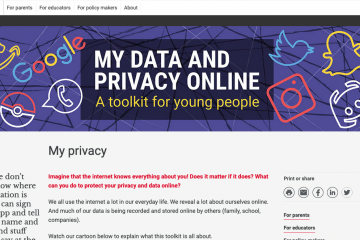
My data and privacy online. A toolkit for young people
The online toolkit aims to promote children’s understanding of the digital environment and support them in making informed decisions about privacy online. It includes information, …
The online toolkit aims to promote children’s understanding of the digital environment and support them in making informed decisions about privacy online. It includes information, videos and many resource recommendations on how data is collected, why privacy is important and how children can enact their own digital rights. The toolkit is aimed at secondary school children as well as parents and educators and was developed together with children and teenagers as part of a research project by the London School of Economics and Political Science.
Das Online-Toolkit zielt darauf ab, das Verständnis der Kinder für die digitale Umgebung zu fördern und sie dabei zu unterstützen, informierte Entscheidungen über Privatsphäre im Internet zu treffen. Es enthält Informationen, Videos und viele Empfehlungen für Ressourcen, die behandeln wie Daten gesammelt werden, warum Privatsphäre wichtig ist und wie Kinder ihre eigenen digitalen Rechte durchsetzen können. Das Toolkit richtet sich an Schüler der Sekundarstufe sowie an Eltern und Pädagogen und wurde gemeinsam mit Kindern und Jugendlichen im Rahmen eines Forschungsprojekts der London School of Economics and Political Science entwickelt.
Online Course “Big Data Literacy“
The online course “Big Data Literacy” is an open educational resource that has emerged from the collaboration between the Center for Teacher Education at the …
The online course "Big Data Literacy" is an open educational resource that has emerged from the collaboration between the Center for Teacher Education at the University of Cologne, Grimme Research and the Grimme Research College at the University of Cologne. The aim of this course is to raise awareness about the world of digital data and its impact on society, following the principles of exploratory learning. The course is specifically designed for teachers and provides them with a fundamental understanding through the provided learning materials, without requiring in-depth technical knowledge.
Der Online-Kurs „Big Data Literacy“ ist ein kostenloses Lehrangebot, das aus der Zusammenarbeit des Zentrums für Lehrer*innenbildung der Universität zu Köln, der Grimme Forschung sowie des Grimme Forschungskollegs an der Universität zu Köln hervorgegangen ist. Ziel dieses Kurses ist es, die Lernenden gemäß den Prinzipien des explorativen Lernens für die Welt der digitalen Daten und deren Auswirkungen auf die Gesellschaft zu sensibilisieren. Der Kurs richtet sich insbesondere an Lehrkräfte und vermittelt ihnen mithilfe der bereitgestellten Lernmaterialien ein grundlegendes Verständnis, ohne dass tiefgehende informatische Kenntnisse erforderlich sind.
Panel Discussion “Big Data”
Sarah Borde und Regina Schulz (2018): Panel Discussion “Big Data”, Hamburg: Behörde für Schule und Berufsbildung Hamburg. The teaching material is aimed at students in …
The teaching material is aimed at students in grades 11 to 13. Students take different perspectives and, based on solid background texts, discuss how Big Data is changing their everyday lives, what potential the huge amounts of data offer, and what risks need to be considered.
Das Unterrichtsmaterial richtet sich an Schülerinnen und Schüler der Jahrgangsstufen 11 bis 13. Die Schülerinnen und Schüler nehmen verschiedene Perspektiven ein und diskutieren auf Grundlage von soliden Hintergrundtexten, wie Big Data ihren Alltag verändert, welche Potentiale die riesigen Datenmengen bieten und welche Risiken es zu beachten gilt.
Plenty to Hide: The toxicity of personal information in the “Big Data” age
Dewes, Andreas (2016): Plenty to Hide: The toxicity of personal information in the “Big Data” age. Vortrag, gehalten auf der re:publica 2016 am 3. Mai …
When asked about their online privacy, most people think they got nothing to hide. In his talk, Andreas Dewes want to show that this is probably not true. He wants to shed some light on the possible dangers of “Big Data” by discussing real-world examples of large-scale data analysis in use today and showing their implications on our lives and our privacy. He argues that we should not mainly think of personal data as a precious resource which we can exploit, but rather a toxic waste product that we need to handle with care and avoid producing too much in the first place.
Wenn man sie nach ihrer Online-Privatsphäre fragt, denken die meisten Menschen, dass sie nichts zu verbergen haben. In seinem Vortrag möchte Andreas Dewes zeigen, dass dies wahrscheinlich nicht stimmt. Er beleuchtet die möglichen Gefahren von "Big Data", indem er reale Beispiele von groß angelegten Datenanalysen diskutiert, die heute im Einsatz sind, und zeigt deren Auswirkungen auf unser Leben und unsere Privatsphäre auf. Er argumentiert, dass wir persönliche Daten nicht in erster Linie als kostbare Ressource betrachten sollten, die wir ausbeuten können, sondern eher als giftiges Abfallprodukt, mit dem wir vorsichtig umgehen müssen und von dem wir gar nicht erst zu viel produzieren sollten.
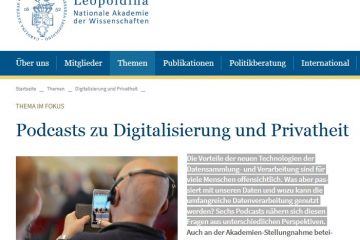
Podcasts zu Digitalisierung und Privatheit
Leopoldina – Nationale Akademie der Wissenschaften (2018): Podcasts zu Digitalisierung und Privatheit, Berlin. The podcast series “Digitization and Privacy” contains short statements by scientists on …
Die Podcast-Reihe „Digitalisierung und Privatheit“ enthält kurze Statements von Wissenschaftler(innen) zu den neuen Technologien der Datensammlung- und Verarbeitung und fragt aus unterschiedlichen Perspektiven, wozu die umfangreiche Datenverarbeitung genutzt wird, beispielsweise für Prognosen und Rückschlüsse aufgrund von Analyseprogrammen, automatisierte Bürosysteme, Predictive Policing oder Big Data.
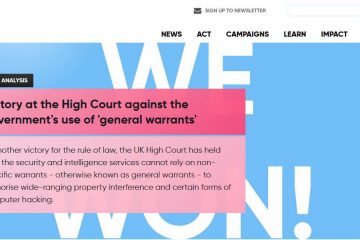
Privacy International
Privacy International is “fighting for the right to privacy across the globe since 1990”. Despite this focus on privacy, the website provides information on various …
Privacy International is “fighting for the right to privacy across the globe since 1990”. Despite this focus on privacy, the website provides information on various aspects around online privacy and big data, such as tracking, targeted advertising, data exploitation, disinformation and internet regulation. Not only is Privacy International’s research, advocacy and legal work portrayed, the website also provides a great amount of easily accessible information such as blog posts, features, reports, case studies and informative short videos. Thus, this critical big data literacy tool addresses the general public and aims for an improved understanding and critical reflection of issues around online privacy and data practices. However, constructive advice is sometimes hard to find on this extensive website.
Privacy International bietet Informationen zu verschiedenen Aspekten rund um den Online-Datenschutz und Big Data, wie z. B. Tracking, gezielte Werbung, Datenausbeutung, Desinformation und Internetregulierung. Die Website enthält eine große Menge leicht zugänglicher Informationen wie Blogbeiträge, Features, Berichte, Fallstudien und informative Kurzvideos. Damit richtet sich dieses kritische Instrument zur Vermittlung von Big Data an die breite Öffentlichkeit und zielt auf ein besseres Verständnis und eine kritische Reflexion von Fragen rund um den Online-Datenschutz und Datenpraktiken ab. Allerdings sind konstruktive Ratschläge auf dieser umfangreichen Website manchmal schwer zu finden.
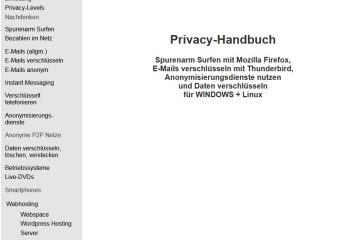
Privacy-Handbuch
The handbook explains why consistent, data-saving behavior on the Internet is so important and gives examples of the consequences of surfing the Net without encryption. …
The handbook explains why consistent, data-saving behavior on the Internet is so important and gives examples of the consequences of surfing the Net without encryption. There are numerous tips on how to use the infrastructure of the Internet without giving away any data in the process.
Das Handbuch erklärt, warum ein konsequentes, datensparsames Verhalten im Internet so wichtig ist und gibt Beispiele für die Folgen des unverschlüsselten Surfens im Netz. Es gibt zahlreiche Tipps, wie man die Infrastruktur des Internets nutzen kann, ohne dabei allzu viele Daten preiszugeben.
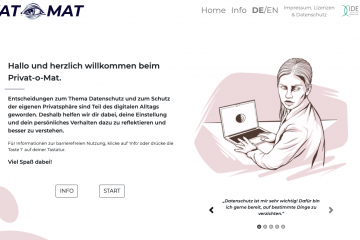
Privat-o-Mat
Institut für Digitale Ethik der Hochschule der Medien Stuttgart: Privat-o-Mat. Stuttgart. The ‘Privat-o-Mat’ / Privacymeter is an online quiz that helps internet users to reflect …
The 'Privat-o-Mat' / Privacymeter is an online quiz that helps internet users to reflect and understand their own behaviour online and their habits regarding data protection. The website asks users 15 questions on different aspects of their daily digital life and offers different answer options. After finishing the quiz, the 'Privat-o-Mat' / Privacymeter shows you your personal data protection type and provides additional advice on how to better protect your data online. The resource constitutes a great entry point to conversations about big data and data protection online.
Der 'Privat-o-Mat' ist ein Online-Quiz, das Nutzer*innen ermutigen möchte, ihre Einstellung und ihr persönliches Verhalten zum Thema Datenschutz zu reflektieren und besser zu verstehen, wie sie im digitalen Alltag informierte Entscheidungen zu ihrer Datenhergabe treffen können. Die Website fragt Nutzer*innen 15 Fragen zu verschiedenen Aspekten des digitalen Lebens und bietet jeweils verschiedene Antwortmöglichkeiten an. Nachdem Nutzer*innen das Quiz beendet haben, erfahren sie ihren persönlichen Datenschutztyp und bekommen weitere Tipps zum Datenschutz online. Die Ressource eignet sich sehr gut als erster Einstieg in Themen rund um Big Data und Datenschutz im Internet.
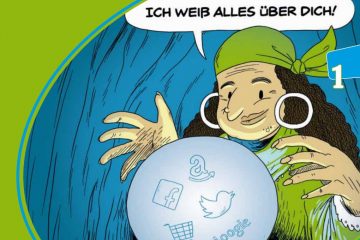
Privatsphäre und Big Data (klicksafe)
Petra Grimm, Karla Neef, Michael Waltinger (IDE/HdM) / Birgit Kimmel and Stefanie Rack (klicksafe) (2015): Click E for Ethics. Navigating the values of digital living. …
"The aim of this media ethics guide is to stimulate the process of considering moral judgements and actions. It hopes to give pupils and students the skills they require to lead a successful life when using digital media and develop their own opinion – an ethos. To simplify this process, we have structured each module in the same way: each section of the “media ethics roadmap” is divided into seven different steps."
"Überwachung, Tracking und Scoring, Big Data, die Macht der Großkonzerne, dies alles sind Schlagworte, die bei Internetnutzern heute ein ungutes Gefühl hinterlassen. In der Auseinandersetzung mit diesen Themen sowie dem eigenen Umgang mit privaten Informationen können folgende Denkprozesse angestoßen werden. Das Ziel ist der Erwerb einer digitalen Privatheitskompetenz."
Search matches: 168
New search